Introduction
Many drivers only look more closely at rims when a purchase or a change is coming up. It quickly becomes clear that the word "rim" is often used in a simplified way, even though several components and technical details belong to it. With modern alloy wheels in particular, the design and shape look very complex, which raises the question of what exactly is actually part of a rim. Without this basic understanding, it is hard to place technical specifications correctly or to judge the quality of a rim.
If you do not know the components of a rim, you can overlook important details. When buying, terms such as offset (ET), rim well (Felgenbett) or pitch circle diameter (Lochkreis) are not understood, which can lead to wrong decisions. Uncertainty also arises during fitting or care if it is not clear which parts work together. Especially with larger rims in the 18 to 22 inch range, this understanding matters, as the demands on strength and construction are higher.
In this article we explain in plain terms which components make up a rim, how it is built and what function each part performs. You will learn how the various elements work together and why modern rims – such as the models from TEC Speedwheels – are engineered so precisely. That gives you a clear picture of what lies behind a rim and what really matters.
The basic components of a rim
A rim consists of several central components that together provide strength and function. These are the spoke section (Felgenstern), the rim well (Felgenbett) and the rim flange (Felgenhorn). Together these parts form the structure on which the tyre is mounted. Each element has its own task, which is crucial to the safety of the vehicle.
The spoke section connects the wheel to the hub and transfers the forces from the vehicle to the wheel. The rim well holds the tyre and makes sure it sits securely. The rim flange prevents the tyre from coming away from the rim under load. This combination produces a stable overall system.
The following overview shows the most important components:
| Component | Function | Significance |
|---|---|---|
| Spoke section (Felgenstern) | connection to the hub | transfers forces |
| Rim well (Felgenbett) | holds the tyre | provides support |
| Rim flange (Felgenhorn) | outer edge | prevents slipping off |
This table shows that a rim consists of several precisely coordinated elements. Models from TEC Speedwheels illustrate this structure particularly well, as they are cleanly finished both technically and visually.
The basic structure is therefore the foundation of every rim and determines its strength.
Which technical elements also belong to a rim
Besides the visible components, there are technical elements that also belong to the rim and are often underestimated. These include the pitch circle diameter, the offset and the wheel load. These values determine whether a rim fits a vehicle at all and how it behaves on the road. Without this information, safe use would not be possible.
The pitch circle diameter (Lochkreis) defines the number and spacing of the fixing holes. The offset (ET) determines the position of the rim in the wheel arch. The wheel load (Radlast) indicates how much weight the rim may carry. These values must match the vehicle exactly so that the rim can be fitted correctly.
The overview below shows the key technical parameters:
| Parameter | Meaning | Influence |
|---|---|---|
| Pitch circle diameter (Lochkreis) | fixing to the hub | accuracy of fit |
| Offset (ET) | position in the wheel arch | looks and clearance |
| Wheel load | load capacity | safety |
This table shows that technical data is an essential part of the rim. In the technical specifications from TEC Speedwheels these values are clearly shown, so the right rim is easy to identify.
The technical elements are therefore just as important as the visible components.
What role the rim material plays
The material is not a separate component of the rim, but it is a decisive part of its properties. Rims are mostly made of aluminium or steel, with alloy wheels the most widely used today. The material affects weight, strength and design possibilities.
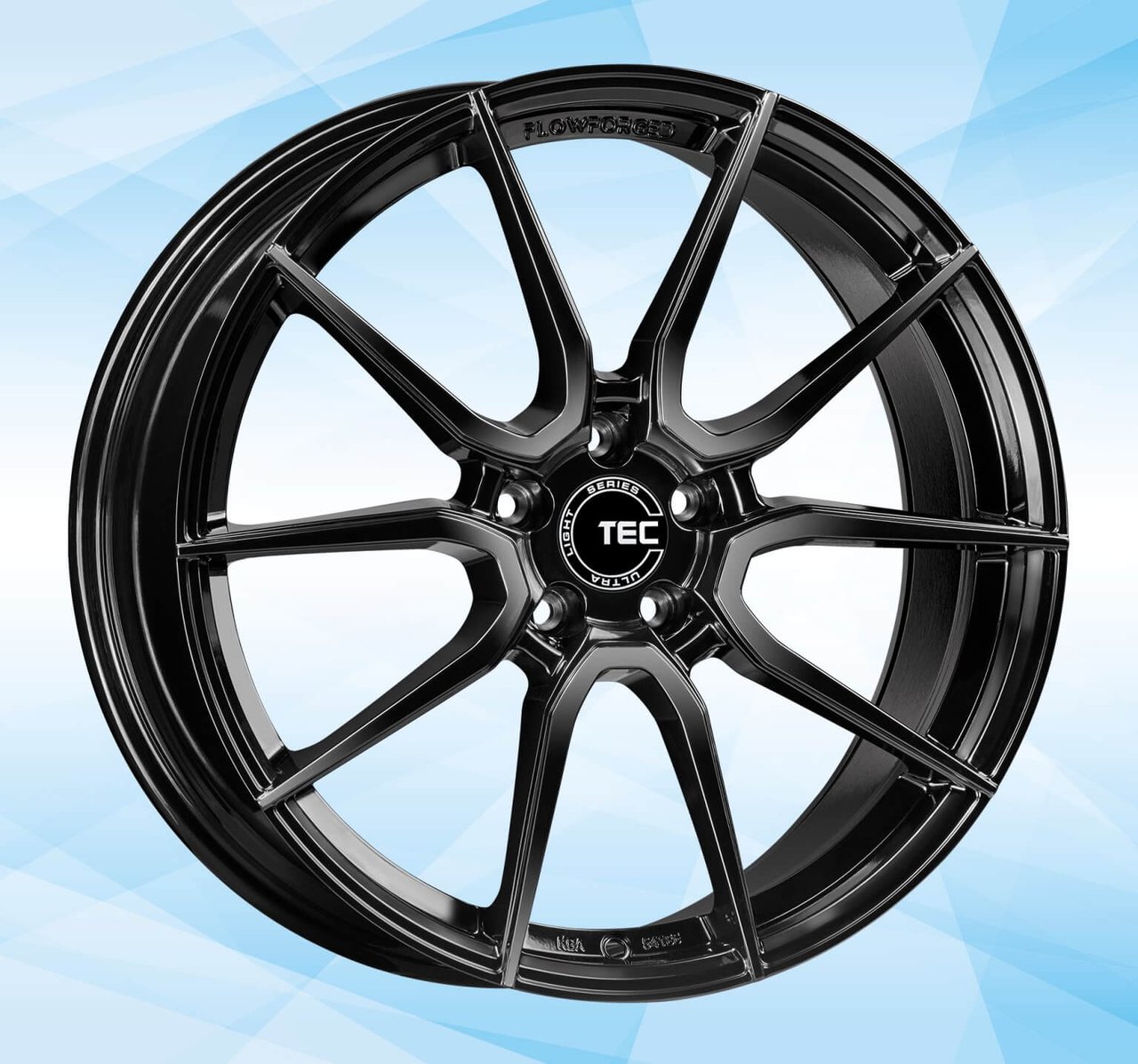
Aluminium rims have the advantage of lower weight and allow modern designs. Steel rims are heavier but simpler in construction. Modern manufacturing methods such as Flowforged also ensure that the material is used optimally and that the rim stays light and strong at the same time.
The following overview shows the differences:
| Material | Characteristic | Effect |
|---|---|---|
| Steel | robust, heavy | functional |
| Aluminium | light, versatile | modern and efficient |
| Flowforged | optimised | light and strong |
This table shows how strongly the material influences the properties of a rim. TEC Speedwheels relies on modern alloy and Flowforged technologies to achieve a balanced ratio of weight and strength.
The material is therefore a decisive component of the rim and largely determines its quality.
What role design and surface structure play
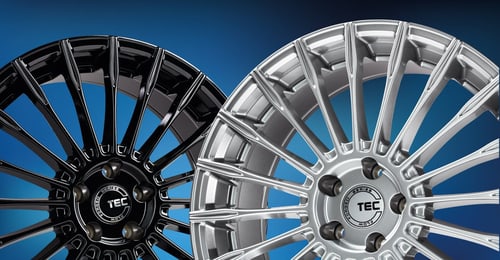
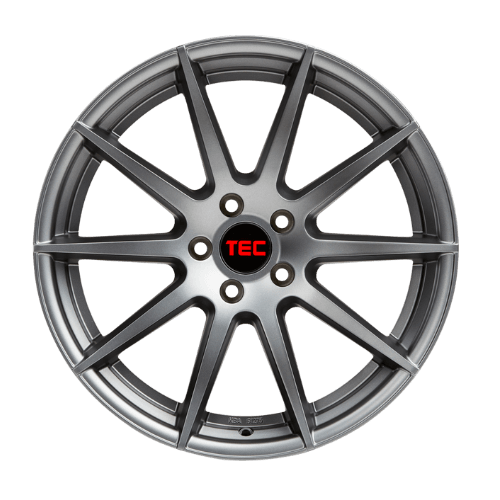
Besides the engineering, design is also part of the rim. The spoke shape, the surface and the colour affect both the looks and the function. Modern rims are designed to be strong and visually appealing at the same time. With larger rims in the 19 to 22 inch range in particular, design plays an important role.
The spokes distribute the forces evenly across the rim. At the same time they create a particular visual effect that makes the vehicle look sportier or more elegant. The surface structure also affects how the rim is cared for and how long it lasts.
Below you will see typical design features:
The key aspects at a glance:
| Design feature | Function | Effect |
|---|---|---|
| Spoke shape | force distribution | looks and strength |
| Surface | protective layer | durability |
| Colour | visual design | impression of the vehicle |
This table shows that design and engineering are closely linked. Models from TEC Speedwheels combine these factors so that both looks and function are implemented optimally.
Design is therefore not just a matter of taste but part of the technical construction.
Which additional parts work together with the rim
The rim also involves components that are not directly part of its structure but work closely with it. Examples are wheel bolts, centring rings and valves. These parts make sure the rim is fitted correctly and sits securely on the vehicle.
Wheel bolts fix the rim to the hub and must fit exactly. Centring rings make sure the rim sits centrally and no imbalance arises. Valves allow the tyre to be filled with air and are also an important part of the overall system.
The overview below shows these supplementary parts:
| Part | Function | Significance |
|---|---|---|
| Wheel bolts | fixing | secure fitting |
| Centring rings | alignment | prevent vibration |
| Valves | air supply | important for tyre function |
This table shows that the rim is part of a larger system. All components must fit together for the wheel to work properly.
The interplay of these parts ensures that the rim can fully perform its task.
Conclusion – what belongs to a rim?
A rim consists of several components and technical elements that together provide strength, safety and function. These include the spoke section, the rim well, the rim flange and important technical values such as offset and wheel load. The system is completed by the material, the design and additional components such as wheel bolts and valves. Modern rims – such as the models from TEC Speedwheels – show how all these factors are brought together to achieve an optimal combination of engineering and looks.
Frequently asked questions about "What belongs to a rim?"
Many drivers are unsure exactly which parts belong to a rim and what function they perform. Misunderstandings often arise when buying or reading technical data, because terms cannot be assigned clearly. The interplay between the rim and other components is not always clear either. The following answers help to clear up the key questions simply.
"Is the rim just the outer ring?"
No, the rim consists of several areas. These include the spoke section, the rim well and the rim flange. Together these parts form the structure that carries the tyre. The outer ring is therefore only one part of the whole rim.
"Which technical data belongs to the rim?"
Important technical data are offset, pitch circle diameter and wheel load. These determine whether the rim fits the vehicle and can be used safely. Without these values, correct fitting would not be possible.
"Why is the material so important?"
The material affects weight, strength and design. Alloy rims offer a good combination of low weight and high strength. Modern processes such as Flowforged improve these properties further.
"Are wheel bolts part of the rim?"
Wheel bolts are not part of the rim itself but belong to the overall system. They make sure the rim is fixed securely to the wheel hub. Without suitable bolts, the rim cannot be fitted.
"What is the difference between a rim and a wheel?"
The rim is the metal part, while the wheel consists of rim and tyre. Together the two components form the complete system that is fitted to the vehicle.
"Why is the construction of the rim so complex?"
The rim has to meet many requirements at once: strength, safety, weight and design. That is why it consists of several precisely manufactured parts that work together exactly.
Our team in Kaiserslautern checks size, offset and approvals for your car. Free and without obligation.
Wheel configurator