
Introduction
Many drivers use their car every day without looking closely at its individual components. In everyday speech, terms such as tyre, rim and wheel are often used interchangeably, even though they describe technically different parts. At the latest when you come to buy rims or change tyres, the question arises of what a rim actually is and what it does. This is often where uncertainty creeps in, because the differences are rarely explained clearly.
When basic knowledge is missing, misunderstandings can follow. Many people do not realise, for example, that the rim has a load-bearing function and is not just a visual element. Technical terms such as offset (ET), pitch circle diameter (Lochkreis) or wheel load (Radlast) are hard to place without that foundation. If you do not understand these relationships, it is much harder to choose the right rim or to judge technical specifications correctly.
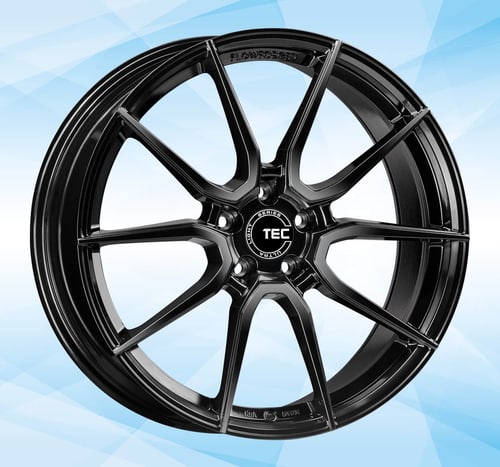
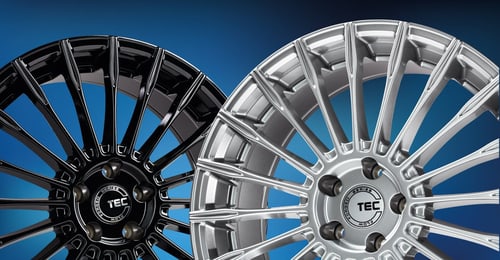
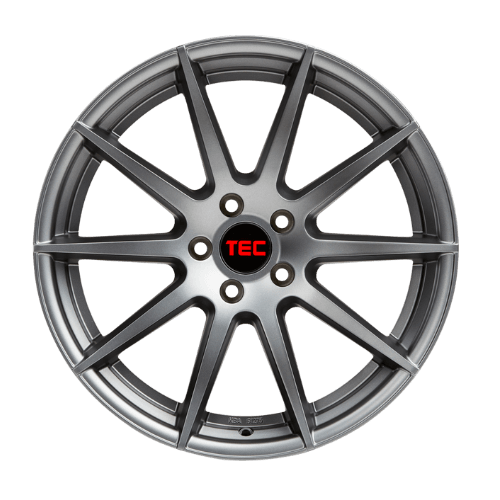
In this article we explain in plain terms what a rim actually is, how it is built and what jobs it does. You will learn how rims differ from tyres, which types exist and what role modern alloy wheels – such as the models from TEC Speedwheels – play. That gives you a clear grounding and helps you make future decisions about rims with more confidence.
What exactly a rim is and what it does
The rim is a central part of the wheel and forms the link between the vehicle and the tyre. It is responsible for carrying the tyre securely while transmitting the forces from the vehicle to the road. Without a stable, correctly engineered rim, safe driving would not be possible. So the rim is not just about looks; it performs an important technical function.
A wheel is made up of several components that work together. The rim is the load-bearing element, while the tyre provides grip and cushioning. This combination allows the vehicle to accelerate, steer and brake safely. Particularly at higher speeds or in corners, strong forces act on the wheel and have to be absorbed by the rim.
The following overview shows the basic function of the rim:
| Component | Function | Significance |
|---|---|---|
| Rim | carries the tyre | central link to the vehicle |
| Tyre | provides grip | contact with the road |
| Wheel | combination of both | complete system |
This table shows that the rim is an indispensable part of the whole wheel system. Models from TEC Speedwheels illustrate how modern rims are optimised both visually and technically to fulfil this function as well as possible.
A rim is therefore far more than a design element – it is a safety-relevant component.
How a rim is constructed and which parts belong to it
A rim consists of several areas, each with its own function. These include the spoke section (Felgenstern), which connects the rim to the wheel hub, and the rim well (Felgenbett), in which the tyre sits. The outer area makes sure the tyre is held securely and does not come away from the rim. Each of these areas has to be manufactured precisely so that the wheel is stable and works safely.
The spoke section is particularly important, as it transfers the forces from the vehicle to the rim. The rim well also plays a major role, since it forms the basis for the tyre's firm seating. Modern rims – such as those from TEC Speedwheels – combine these elements with precise manufacturing to balance stability and weight optimally.
The overview below shows the most important components:
| Component | Function | Significance |
|---|---|---|
| Spoke section (Felgenstern) | connection to the hub | transfers forces |
| Rim well (Felgenbett) | holds the tyre | provides support |
| Rim flange (Felgenhorn) | outer edge | prevents slipping off |
This table makes clear how much technical detail goes into a rim. Each area performs an important task, and the wheel only works reliably when all components interact perfectly.
The construction shows that a rim is a technically demanding component that has to be manufactured with precision.
What types of rims there are
Rims differ not only in design but also in material and manufacturing process. Steel rims and alloy rims are the most common. While steel rims are rather functional, alloy rims offer considerably more design freedom and often a lower weight. Within alloy rims there are in turn various manufacturing methods, which differ in strength and weight.
Below you will find an overview of the main types of rim:
| Rim type | Material | Characteristic |
|---|---|---|
| Steel rim | steel | robust, heavy |
| Cast rim | aluminium | versatile, strong |
| Flowforged rim | aluminium | light and modern |
This table shows the basic differences between the rim types. Alloy rims in particular – like those offered by TEC Speedwheels – combine design, engineering and everyday practicality.
The choice of rim therefore depends not only on looks but also on the technical requirements and the intended use.
Why rims affect handling and comfort
The rim influences handling more than many people assume. Its weight, size and construction determine how the vehicle responds to movement. Lighter rims give a more direct driving feel, while heavier rims can make the vehicle feel more sluggish. Size also plays a role, since larger rims are often combined with lower-profile tyres.
The following overview shows typical effects:
| Property | Influence on the vehicle |
|---|---|
| Weight | affects agility |
| Size | changes comfort |
| Construction | determines stability |
This table makes clear that the rim is an active part of the vehicle's handling. Models from TEC Speedwheels are often designed to offer a good balance between weight and strength.
The right rim therefore delivers not only better looks but also a more pleasant driving feel.
Why modern rims do more than they used to
Developments in rims have changed considerably in recent years. Modern manufacturing methods make it possible to produce lighter and stronger rims. At the same time, design and surface quality play an ever greater role. Today rims are expected not just to function but also to look convincing and to last.
Many current models are designed for larger sizes such as 18, 19 or 20 inches, because these suit modern vehicle design. At the same time, improved coatings make the rims more resistant to external influences. Series from TEC Speedwheels show how modern technology and design are combined.
As a result, rims can now do much more than they used to. They are lighter, stronger and more varied in appearance.
Conclusion – what is a rim, actually?
A rim is a central component of the vehicle that does far more than determine its looks. It carries the tyre, transmits forces and has a major influence on handling. Thanks to modern materials and manufacturing techniques, the rim has developed into a technically sophisticated and at the same time stylish element. If you understand its function and construction, you can make better buying decisions and choose the right rim for your vehicle.
Frequently asked questions about "What is a rim, actually?"
Many drivers treat rim and tyre as the same thing, although they are different components. This mix-up often causes uncertainty, especially when buying new rims or changing tyres. Technical terms such as offset or wheel load also seem complicated if the basic understanding is missing. The following answers help to clear up the key questions simply.
What is the difference between a rim and a tyre?
The rim is the metal part on which the tyre sits. The tyre is made of rubber and provides contact with the road. Together they form the wheel. Without the rim, the tyre could not be fixed securely to the vehicle.
Why is the rim so important for safety?
The rim carries the tyre and transmits all the forces while driving. It must be strong enough to withstand the loads of cornering, braking and accelerating. A damaged or poor-quality rim can have a negative effect on handling and is a safety risk.
What types of rim are there?
The main types are steel rims and alloy rims. Alloy rims are usually made of aluminium and offer advantages in weight and design. Modern variants such as Flowforged rims combine strength with lower weight.
Does the rim affect handling?
Yes, the weight and size of the rim have a direct effect on handling. Lighter rims improve agility, while larger rims change the look of the vehicle and affect the driving feel.
Can I fit any rim to any car?
No, every rim must technically suit the vehicle. Factors such as pitch circle diameter, offset and wheel load have to be right. In addition, a suitable approval is required so that the rim may be used legally.
Why are modern rims often larger?
Larger rims suit modern vehicle designs better and look sportier. At the same time, new manufacturing methods allow strong constructions even at larger diameters.
Our team in Kaiserslautern checks size, offset and approvals for your car. Free and without obligation.
Wheel configurator